
I love to fish; just ask my wife. On road trips, I can’t pass a body of water without wondering about its fishing possibilities out loud. I know this can be annoying, but I can’t help it. Because of this need for outdoor involvement, I’ve been looking for new opportunities. Over the last few years, I’ve started dabbling in saltwater fishing. I’m not talking about charter boats with a guiding captain. I’ve done that in the past. I’m talking about do-it-yourself, small-tackle fishing from sand.
Beach trips have become an annual occurrence for my family. They love spending a week soaking up the sun while watching the waves roll in. I do too, but the appeal of catching fish we don’t have at home keeps growing. As I said earlier, I’ve been on charter trips, but we usually book only one day because of time and expense. They are fun, but they don’t quite scratch the itch I have. Three summers ago, we decided to ditch the charters and try surf fishing on our own. Sure, there would be a learning curve, but we could do it every day. That’s what I’m looking for.
I’m not going to lie, there has been a pretty tough learning curve. Learning proper equipment and rigs, navigating bad weather and water conditions, and learning what to look for have all been tough. But I think I’m starting to figure it out. I just returned from my latest and most successful surf fishing trip to date and am happy to share what I’ve learned.
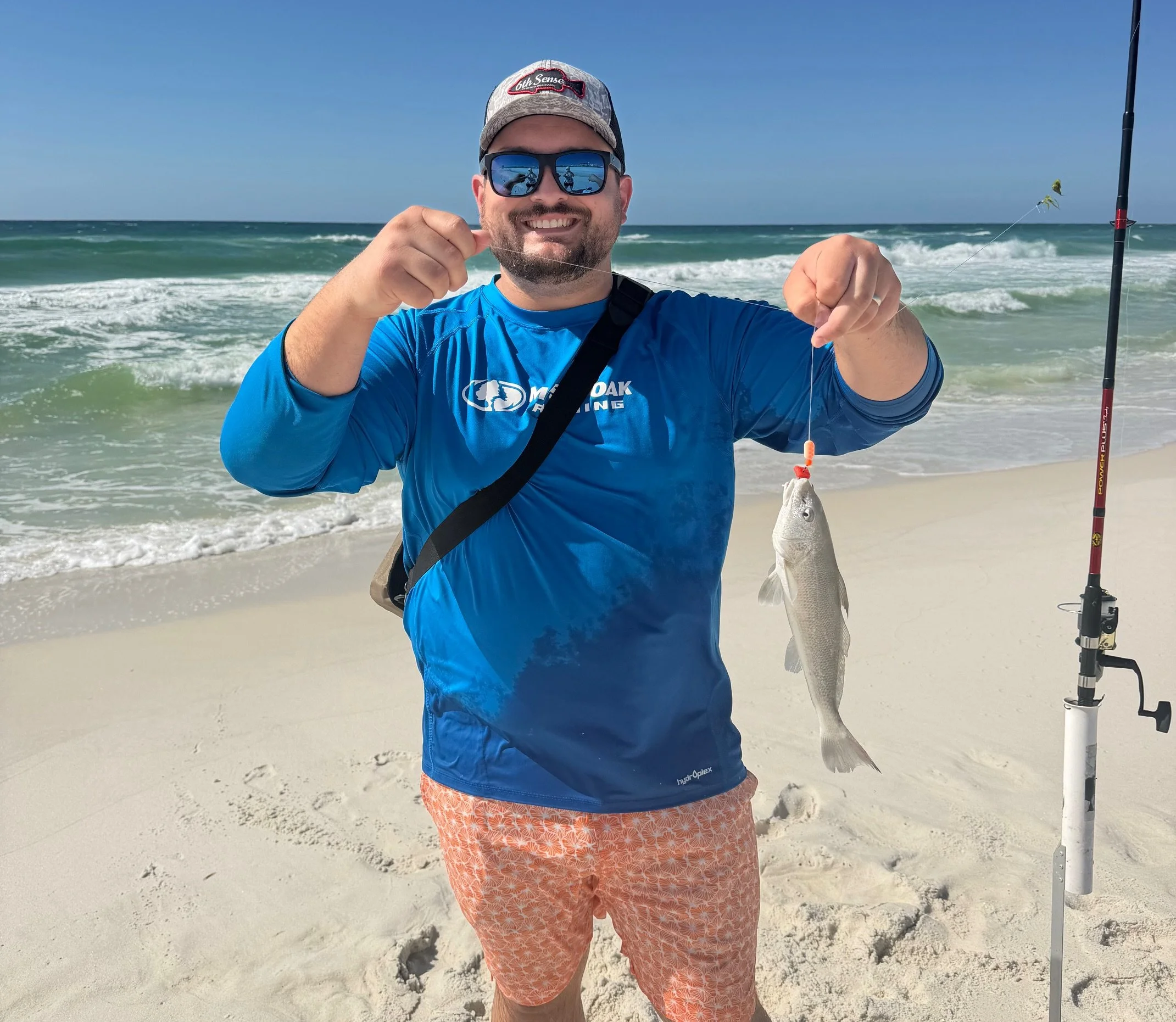
Why Surf Fishing
I’ve already touched on this a little bit, but the benefits of surf fishing go deeper than what I previously mentioned. To start, it’s significantly cheaper than going on a fishing charter. Charter trips generally cost anywhere between $200 and $300 per person. Surf fishing from the beach costs between $20 and $50 for a license and can be done for less than $100 in equipment. Not to mention, you can use the same gear year after year. There is no comparison from a price standpoint.
Secondly, you fish every day. Once you buy the license, nothing is stopping you from fishing, other than weather, of course. We just take our poles to the beach with us. Once we get the chairs, umbrellas, and coolers set up, I bait my rod and cast it out. Then all there is to do is sit, relax, and wait. It’s quickly becoming my favorite way to fish.
Lastly, it’s a great way to involve the whole family. On this most recent trip, my wife Taylor reeled in more fish than I did. Due to the minimal skill level needed and the cast-and-wait method of fishing, it’s easy for fishermen of all levels. My daughter is not old enough to fish yet, but I know one day she is going to get in on the action too.
Oh, and most saltwater fish are delicious!
Surf Fishing Equipment and Rigs
Surf fishing requires just a basic assortment of gear. It’s akin to catfishing. Here are the specifics of my surf fishing arsenal:
7’ medium-heavy fiberglass spinning rod
5000-size spinning reel with 4:4.1 gear ratio
20-pound clear monofilament line
Bama Saltwater single hook pompano rigs
2 and 3 ounce pyramid weights
Long needle-nose pliers
Fish gripper
Pocket knife
Small KastKing fishing backpack
Staked rod holder
It’s a pretty simple setup, and that’s all you need. My list is just an example that includes the basics, and almost everything on my list can be bought at Academy, Walmart, and Bass Pro. The only thing that didn’t come from one of those stores was the pompano rigs, which I ordered direct online. But once again, a different brand can be bought at any Walmart near a beach.
As far as the rod and reel setup goes, it must be at least 7’ long and a 4000-size reel. The longer rod allows for longer casts, while the bigger reels will spool more line and handle bigger fish. Most of the fish you catch will be less than 2 pounds, but you never know what you might hook into.
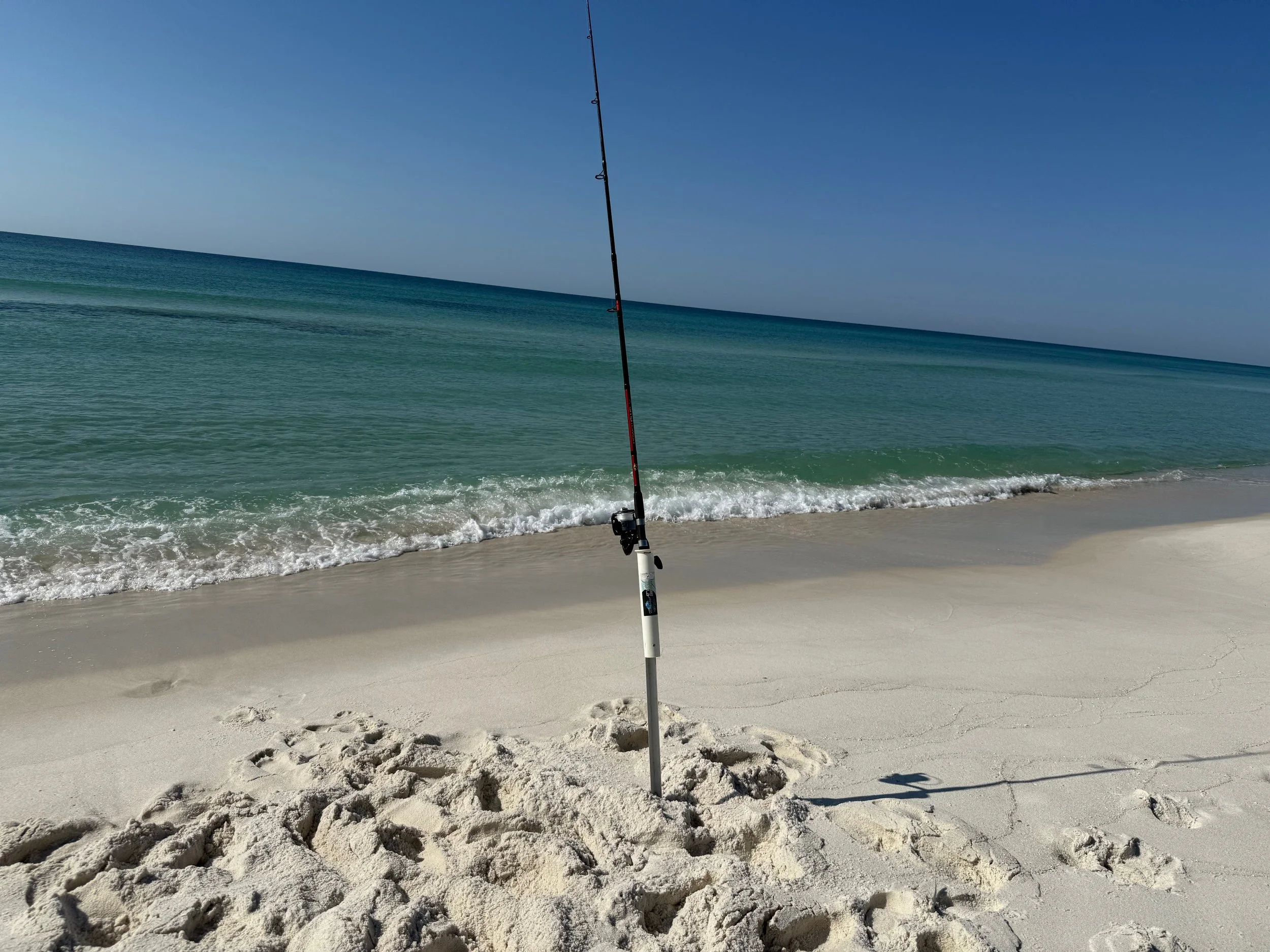
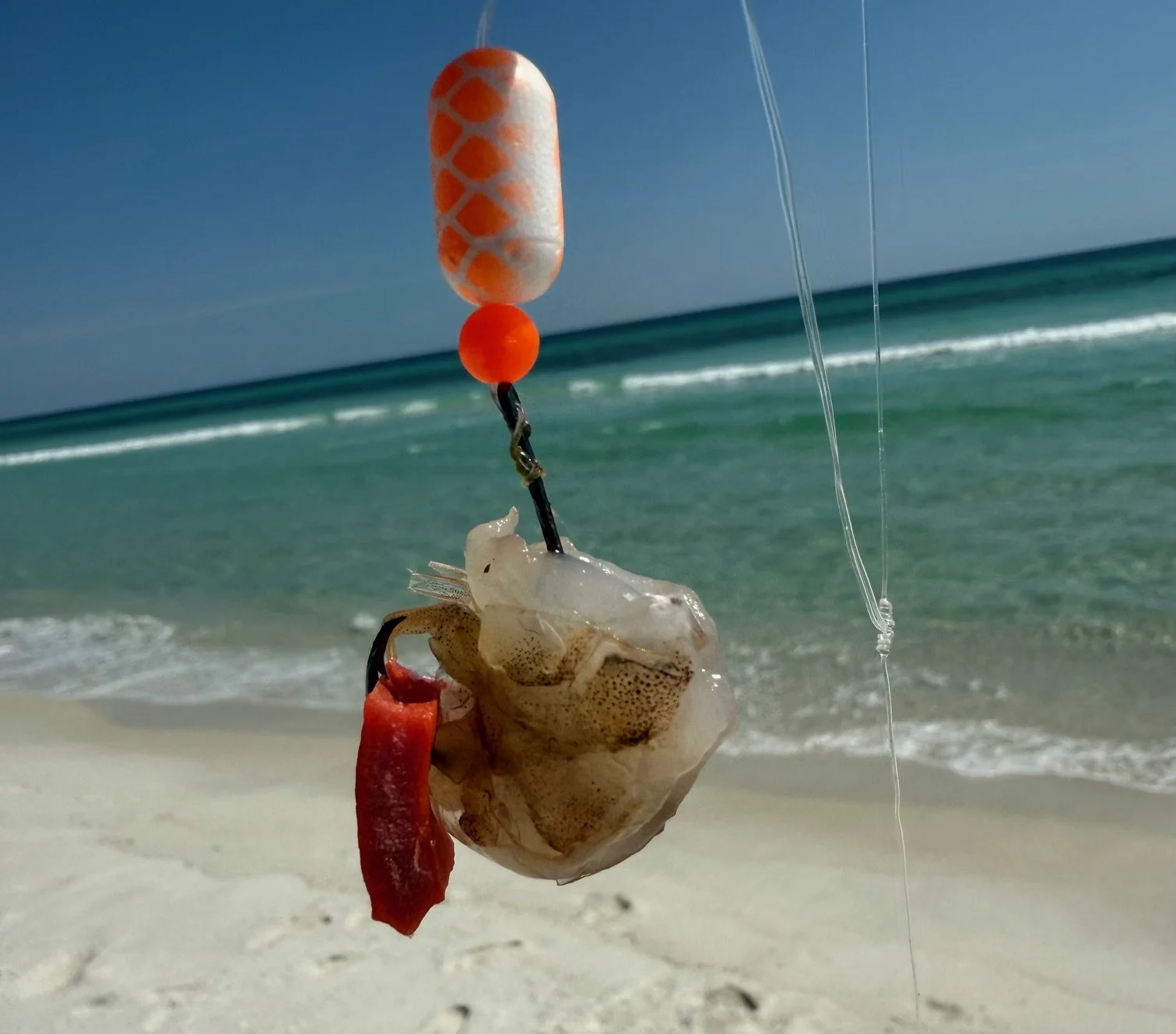
Rig selection is important as well. A simple pompano rig is what most experts recommend. It’ll catch most surf species but is great for enticing pompano, whiting, black drum, and redfish specifically. We have caught all of those species on these rigs. For those who don’t know what a pompano rig is, imagine a roughly 2-foot-long fluorocarbon leader with a swivel on one end and a weight clip on the other. Halfway between the swivel and the weight is a 6 or 7 inch leader with a float and hook. The heavy pyramid weight will ensure your bait stays in the surf and won’t wash in.
The Technique
I can’t emphasize enough how simple surf fishing can be. Like anything, it’s scalable, and I’m nowhere near maxing out the potential, but it shouldn’t be intimidating for anyone wanting to give it a try. For best results, try to avoid stormy days or days where the waves are crashing. Yellow flag or better is ideal. When setting up for the day, try to pick a spot where the water has some deeper troughs. A long, shallow shelf will not yield the best results.
Once you’ve established a spot, it’s time to do some rigging. Simply tie your pompano rig onto your main line via the swivel. Start with a 2-ounce pyramid weight for lighter surf conditions and step up to a 3-ounce if the waves are heavier. Once your rig is complete, you need to tip your hook with bait. For simplicity and versatility’s sake, it’s hard to beat fresh shrimp. Just pinch off a small piece and thread it onto the hook. If you want a little extra attractant, tip the hook with Fish Bites, a synthetic scent bait that can be bought at Walmart.
Logically, you would think the longer the cast, the better. This isn’t always the case. I aim to drop my bait in the deepest part of the trough. Most beaches have a secondary, shallow sandbar between 40 and 100 yards away. The fish will travel the deep trough between the primary and secondary sandbar. Cast here and wait.
Once your line is in the water, you can watch for a bite. Due to the larger tackle selection and the smaller catch size, a bite isn’t always obvious. The waves will cause the rod tip to always have a bending-then-relaxing motion. Start by looking for any erratic or unfamiliar motions. This could be a fish. Also pay attention to a suddenly slack line. We noticed a lot of bites this way on this trip. The fish will bite and then immediately swim towards you, creating slack.
Lastly, I want to discuss some fish handling tips. I advise all surf fishermen to handle fish with caution. Sharp fins and many teeth can make handling most fish a hazard. I’ve learned this the hard way by improperly handling a saltwater catfish. I ended up in urgent care with that ordeal. This is why I keep a fish grabber and pliers in my bag. Also, don’t forget that knife. Dispatching and bleeding your catch makes them easier to handle and a whole lot tastier.
I hope this basic surf fishing guide is helpful. I encourage anybody to give this a try on their next beach trip. Like all other endeavors, there is some trial and error involved, but it’s well worth it. As for me, I will be enjoying the couple dozen tender whiting filets.