
In 2024, the state of Arkansas instituted an early-season, buck-only archery hunt for hunters wanting to tag a velvet whitetail. Considering that I am an Arkansas lifetime hunting license holder and had never killed a velvet buck before, I was happy to give it a shot. How hard could it be? Bucks are uncharacteristically visible during daylight hours at that time of year and are addicted to food. It should be easy to catch up to one and check another box off my bucket list.
Over the next two seasons, I would quickly learn that pulling this off wasn’t as easy as I had thought. I assumed the use of supplemental feeding and trail cameras would seal the deal. What I hadn’t accounted for was the miserable hunting conditions, quickly evolving buck patterns, and human error. Okay, the human error I’m referring to would be poor shot planning and a painful miss on my part. Whether I had already had a chance or not, the fact of the matter was I was entering the 2026 Arkansas velvet season and still had not accomplished my goal. This would be my third attempt, and I was praying that the third time would be the charm.
This year started just like the last two, with multiple trail cameras placed and supplemental feeding stations established. The farm that I have permission to hunt was planted in soybeans this summer, and the adjacent CRP grass was as thick as ever. This made it easy to see a strict bed-to-food pattern. My dad and I spent two weeks analyzing trail camera photos and refilling bait sites. Because we had established everything multiple weeks before the hunt, we had ample time to make adjustments and find the deer.
Our plan worked. After establishing a third setup, we finally found what we were looking for: an accessible spot that multiple shooter bucks were visiting during the daylight. This spot just made sense. It was wedged in a tight transition area between the main bedding area and the soybean field where the bucks were feeding every night. The bucks would visit the bait site before moving on to the soybeans later; at least that’s what I thought would happen.
I spent the week leading up to the hunt preparing. I made sure my bow was in tune, my clothes were treated for ticks, and my backpack was packed with all of my gear. I felt ready for this hunt. I tried to temper my confidence, however, because the last two seasons hadn’t paid off. But everything appeared to be lining up. The bucks were still showing up on camera, and I was shooting well. Now I just needed some luck.
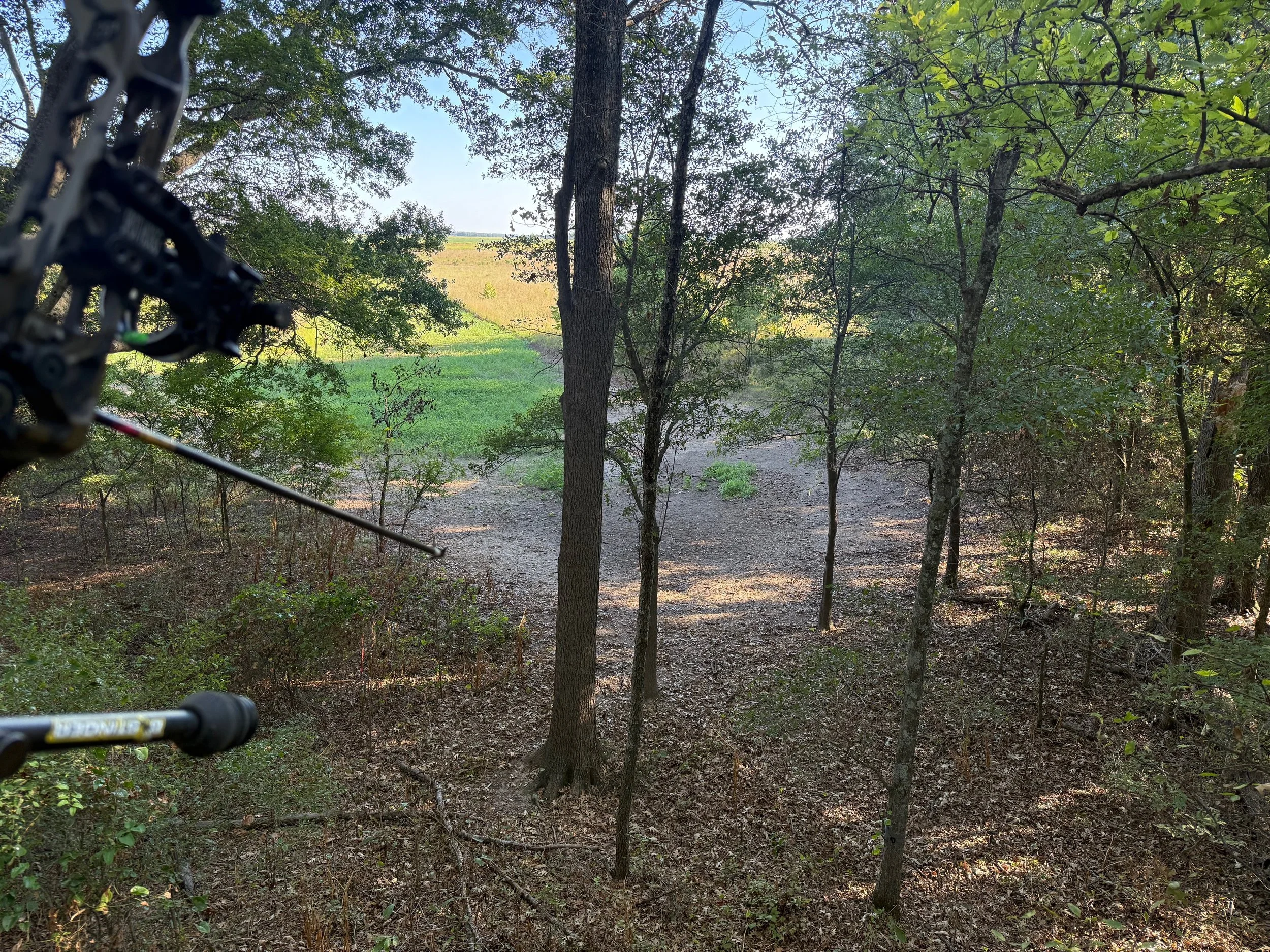
Fast forward to opening day. I didn’t hunt that morning out of fear of alerting deer. I felt that entering my setup before daylight would be too risky, and I would have to walk past too many deer transitioning back to bedding. I thought it would be best to bide my time and wait for the afternoon hunt. I knew I could get in the stand without alerting many deer. That would be my best chance. So, I shot my bow and napped until it was time to hunt.
I climbed into the stand about three hours before dark. It was hot, but the wind was strong enough to keep me from being miserable and kept the mosquitoes down. Considering this was the first hunt of the year, I felt out of sorts. Climbing the tree felt awkward, and I couldn’t perform my gear ritual smoothly, but I finally settled and waited for something to happen. I was hoping that I wouldn’t have to wait long.
It wasn’t long before I saw the first deer of the evening, a small group of does. To my surprise, though, they were not heading my way. They were a couple hundred yards out and headed away from me towards the soybeans. It wasn’t long before I spotted a buck in the distance taking a similar path. He wasn’t a shooter, but I was still surprised that the deer were heading straight to the soybeans. Maybe this was routine for the herd. As we all know, trail cameras don’t tell the whole story.
As the afternoon progressed, I watched deer after deer follow the same path. I was flabbergasted. One of the deer was a really nice nine-point that I was hoping to cross paths with. Well, I guess I did technically…but was hoping for a closer look. My afternoon was starting to look a little bleak.
The sun finally set, and I noticed some does heading towards my setup. Finally, some deer were reading the script. The problem now, though, was that the mosquitoes were starting to get to me. This would end up being a problem because as the does fed just 18 yards away, I couldn’t stop swatting the mosquitoes. I wanted to dive out of the stand just to escape them. After a few more swats, the does had seen enough and decided to leave.
I had mere minutes left and knew a buck could still show up, but I had to solve the mosquito problem. I remembered that I had brought a Thermacell with me in my backpack, but in my early-season rust I had forgotten to turn it on. I lit it and placed it on my stand rail below my face. Just as I started to feel relief from the blood suckers, I noticed movement 50 yards away.
I picked up my binoculars to check the scene. I had just enough light to make out a buck, and it looked like a good buck. It was to the point now where I had literal minutes to make something happen. It was getting darker by the second, and I wasn’t 100% sure that I was going to be able to pull this off. Finally, the buck started walking closer. I got up and got my bow ready to draw.
The buck looked like he was moving in slow motion. I knew time was of the essence, and my anxiety was growing immensely. The buck finally broke the 20-yard mark and turned broadside to feed. I drew my bow and tried to find the buck in my sight. It was so dark that I was having trouble seeing the buck through my peep sight. It couldn’t gather enough light. I seriously considered letting down and giving up, but decided to try one more thing.
I centered my sight on the buck the best that I could and opened my other eye. Now I could see the buck and the pin. This isn’t usual form for me, but I felt like I could pull it off. I moved the pin to the buck’s vitals and blinked a couple times to make sure I was seeing correctly. I started my squeeze on the trigger and was surprised by the shot. I heard the arrow as it made a loud thud into the buck’s ribs. It sounded good.
The buck bolted hard, and I could hear his hoof beats on the hard ground. He only ran about 30 yards before he went silent. I knew I hadn’t missed, and I felt like it was a good shot, but I was slightly concerned. A few seconds passed, and I heard the loud thrashing of brush. The buck had fallen and was dead. I couldn’t believe that I had pulled it off right at dark.
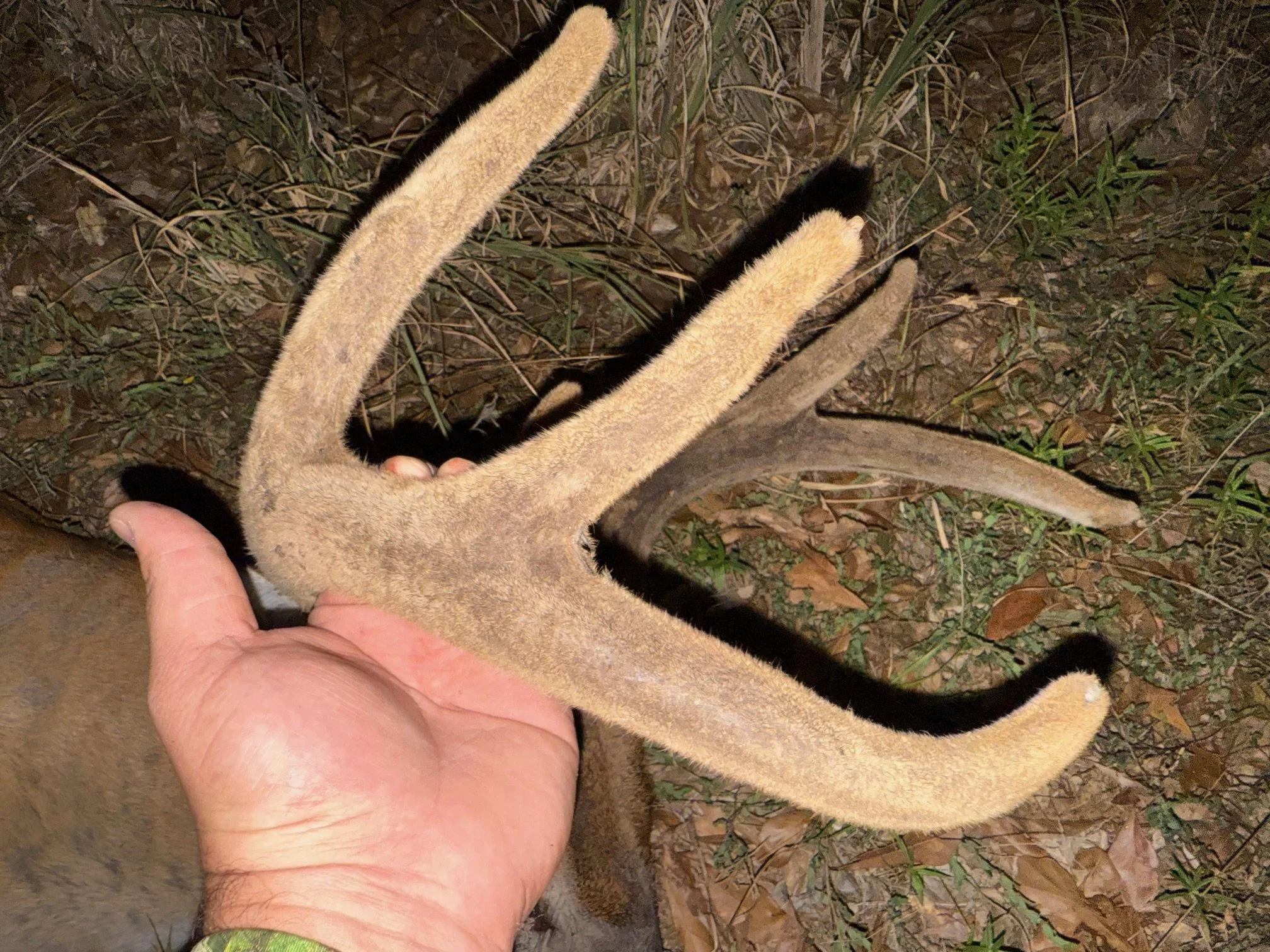
My dad was there in a matter of minutes to help me retrieve the buck. We followed a short blood trail right to where I thought I had heard the buck fall. Sure enough, he was right where I expected him to be. I was delighted to lay my hands on my first velvet buck. He was officially the biggest 6-point that I’ve ever killed and was no doubt mature. He had to be over 200 pounds already. No matter what he looked like, he was a trophy and a hard-earned memory in my mind. Third time’s the charm for velvet bucks.